
Crossword puzzles are simple to start but surprisingly deep to master. You read a clue, enter an answer, and use intersecting letters to solve the rest of the grid. Digital crossword games make the experience even easier because they can provide daily puzzles, timers, hints, statistics, archives, and progress tracking.
For more useful guides, news, and information, visit our Washington Post homepage to explore the latest content.
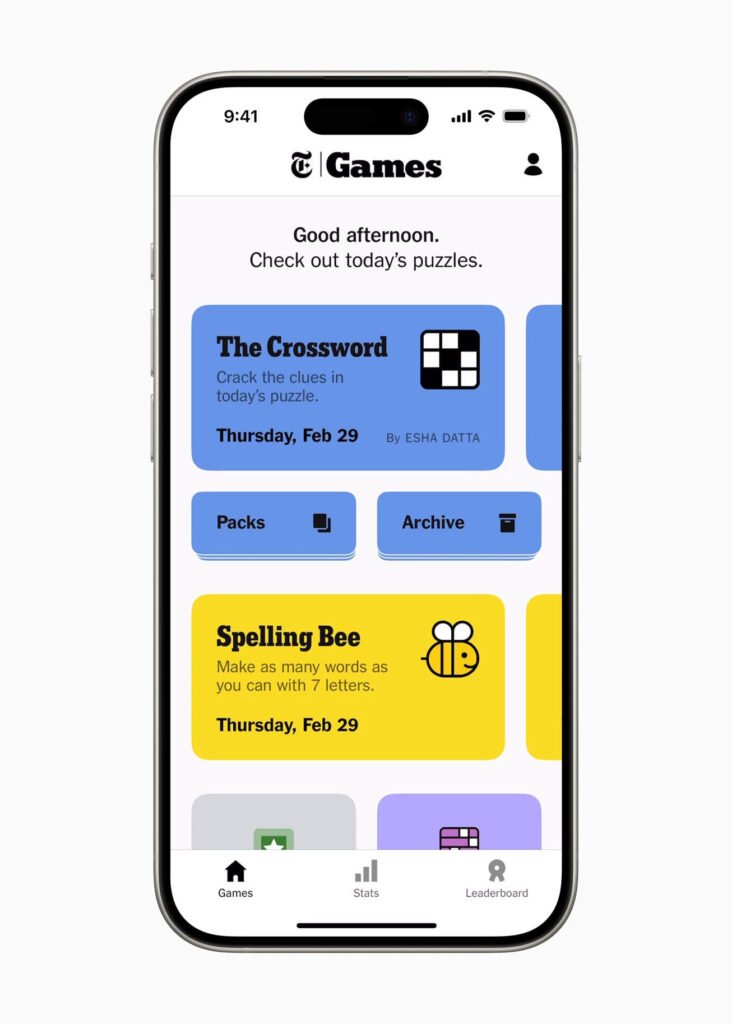
For this guide, The New York Times Crossword in the NYT Games app is used as the main example because it is one of the best-known digital crossword platforms. The same solving methods also apply to most crossword websites and apps. The current NYT Games app includes the classic Crossword, Mini Crossword, Midi Crossword, and several other word and logic games.
What Is a Crossword Game?
Crossword
A crossword is a word puzzle made from a grid of white and black squares. You answer clues and place words horizontally or vertically into the white squares.
The important part is that answers cross each other. A letter that belongs to one answer must also work for the intersecting answer. This is what makes crossword solving a combination of vocabulary, reasoning, spelling, memory, and deduction.
In the NYT Crossword, the full-size puzzle becomes progressively harder through the week, with the earliest puzzles generally being more approachable and later-week puzzles becoming more difficult.
Why Digital Crossword Games Are Popular
A paper crossword is enjoyable, but a digital crossword gives you more flexibility.
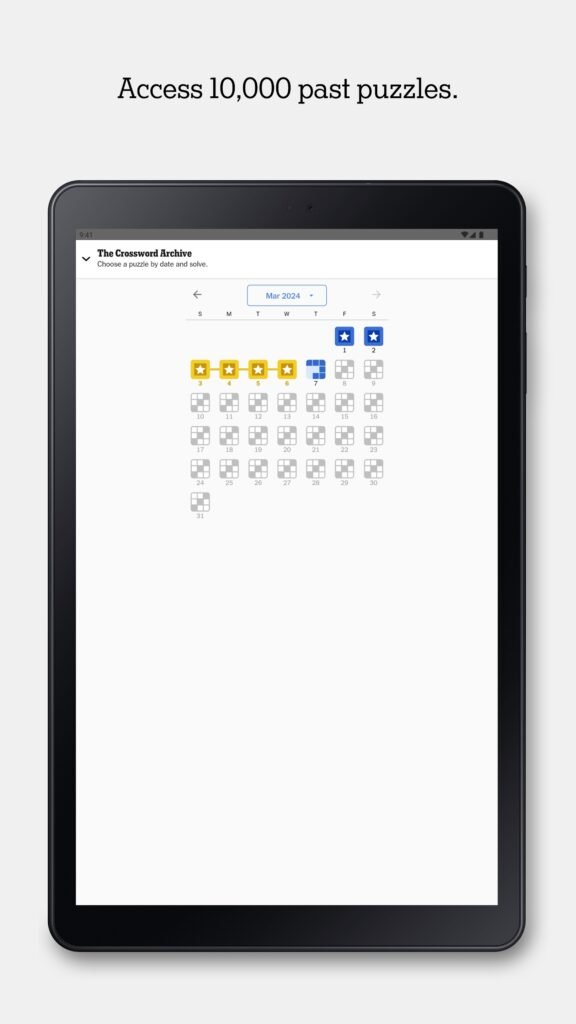
You can play on a phone during a short break, use a tablet at home, or solve on a computer when you want a larger grid. The NYT Games app also provides statistics and other game features, while subscribers can access a large archive of older puzzles. The current App Store listing says subscribers can access more than 10,000 archived puzzles.
Digital crossword games are particularly useful for beginners because mistakes can be corrected without erasing an entire page.
How to Create a Crossword Game Account
Creating an account is useful when a platform offers progress tracking, subscriptions, archives, or access across multiple devices.
For NYT Games, first-time users can create a free New York Times account. Public-library instructions for NYT Games also confirm that users can create a free NYTimes.com account and then use those credentials with the Crossword app.
Step 1: Open the Official Crossword Platform
Go to the official New York Times Games website or install the NYT Games: Wordle & Crossword app from the official App Store or Google Play listing.
On Android, the official Google Play listing identifies the developer as The New York Times Company.
On Apple devices, the official App Store listing also identifies The New York Times Company as the developer.
Step 2: Choose Sign Up
Look for the account or sign-in option and select the option to create a new account.
You will normally need an email address and password. Use an email address that you will continue to have access to because account recovery and verification can depend on it.
Step 3: Verify Your Email
Complete any email verification step shown during registration.
Check the spam or junk folder if a verification email does not appear quickly.
Step 4: Sign In
After creating your account, sign in using the same credentials on the website or app.
This is especially useful when you play on more than one supported device because you can keep using the same account rather than creating separate game profiles.
Step 5: Select Your Crossword
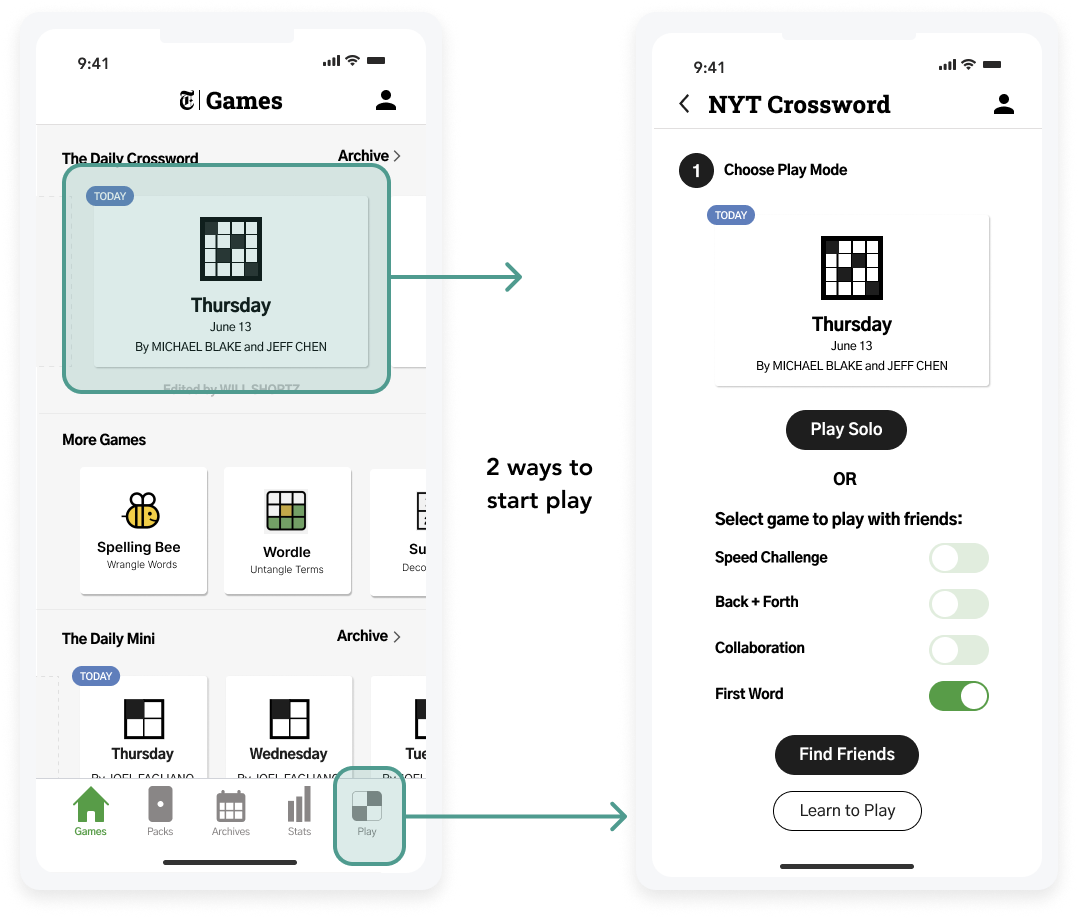
Once logged in, open the Games section and choose The Crossword, Mini Crossword, or Midi Crossword, depending on your skill level.
The current NYT Games app specifically lists the Midi Crossword as a middle-sized option between the Mini and the traditional Crossword.
Screenshot: Crossword Interface
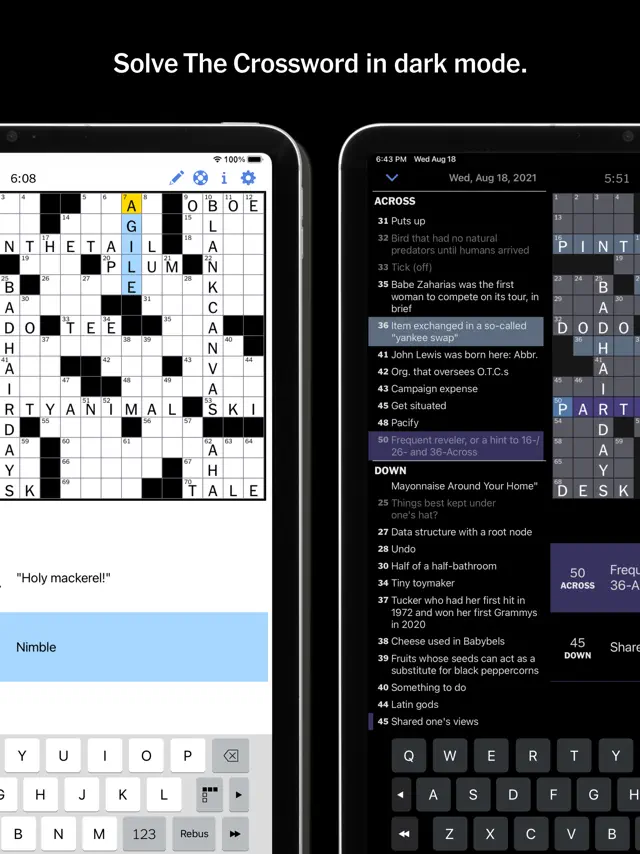
The following image shows a typical NYT Crossword-style digital interface with the puzzle grid, clue area, timer, navigation controls, and on-screen keyboard.
Screenshot note: App layouts change over time, so individual buttons, menus, colors, and navigation locations may look different in newer versions.
How to Start Your First Crossword
1. Read the Clues
1. Look at all the clues before entering random answers.
2. Start with clues you immediately understand.
3. Clue: Opposite of “yes”
4. Answer: NO
5. Simple answers like this give you letters that help solve harder clues.
2. Solve the Short Answers
1. Short answers are often easier because the possible word choices are limited.
2. A three-letter answer with one known letter can become much easier after nearby clues have been solved.
3. Use Crossing Letters
1. Suppose a clue seems impossible.
2. Do not spend five minutes forcing an answer.
3. Instead, solve other clues that cross it. Once several letters appear, the difficult answer may become obvious.
4. This is the fundamental crossword strategy:
clue → answer → crossing letter → new clue → answer
4. Recheck the Spelling
1. A crossword answer can look correct while still being wrong.
2. One incorrect letter can create several impossible clues later.
3. When several answers stop fitting, go back to the earliest uncertain answer rather than guessing more words.
Understanding Across and Down Clues
Most crossword grids use two main directions:
Across means the answer runs from left to right.
Down means the answer runs from top to bottom.
Each answer has a number. The same number can sometimes represent an Across clue and a Down clue because both answers begin at the same square.
For example:
12-Across: Large body of water
12-Down: Opposite of cold
You solve both answers, but their letters occupy different directions in the same grid.
This crossing system is what allows a difficult clue to become easier later.
The Best Crossword Strategy for Beginners
A common beginner mistake is trying to solve the clues in order.
That is not necessary.
Instead, use a confidence-first strategy.
Start With Answers You Know
Immediately enter obvious answers.
This produces letters throughout the grid.
Move to Medium Clues
Once several letters are available, return to clues that looked uncertain at first.
Leave Hard Clues for Later
A difficult clue is not a failure. Crossword construction deliberately includes clues that become easier after intersecting answers are available.
Avoid Guessing Too Early
A random answer can damage several crossings.
Use guesses only when you have enough supporting letters.
Advanced Crossword Solving Tips
Look at the Grammar
The wording of a clue often gives you a grammatical clue about the answer.
For example:
Clue: Running quickly
This may suggest a verb or participle.
Clue: Birds, for short
The phrase “for short” may indicate an abbreviation.
Small wording changes can significantly change the expected answer.
Watch for Plurals
If the clue is plural, the answer usually needs to fit the plural form.
A clue such as “Flying mammals” is unlikely to require a singular answer.
Watch for Abbreviations
Crossword clues may intentionally indicate abbreviated answers through wording such as:
- Briefly
- For short
- Abbr.
- Initials
Do not assume every clue is asking for a normal dictionary word.
Expect Wordplay
Good crosswords often use puns, double meanings, cultural references, and misleading phrasing.
A clue may initially appear to ask for one type of answer and then reveal another interpretation.
Use the Grid as Evidence
The crossword itself gives you information.
If a five-letter answer has this pattern:
_ A _ E _
you can start thinking of possible words that match the pattern.
The more letters you have, the smaller the answer pool becomes.
Which Devices Are Reliable for Crossword Games?
The best device depends on how you like to play.
Desktop or Laptop
- A computer is one of the best options for serious crossword solving.
- The larger screen makes it easier to see the full grid and clue list at the same time.
- It is especially useful for students who already spend time studying on a laptop.
- Best for: Long solving sessions, detailed puzzles, research, and large screens.
Tablet
- A tablet is arguably the most comfortable mobile option.
- The grid is larger than on a phone, and touchscreen interaction feels natural.
- Best for: Home use, studying, and longer crossword sessions.
iPhone
- The official App Store currently lists the NYT Games app for iPhone and iPad, with the current listing requiring iOS 18.0 or later.
- An iPhone is excellent when you want to solve quickly during a break or while traveling.
- Best for: Quick daily puzzles and portability.
Android Phone
- The official Google Play listing supports Android phones and identifies the app as available for phone, tablet, and Chromebook categories.
- Android is a good choice when you prefer a wider selection of hardware and screen sizes.
- Best for: Portable solving and flexible device choices.
Chromebook
- Chromebooks can be useful for students because they combine a computer-style screen with easy access to browser-based learning tools.
- The Google Play listing currently identifies Chromebook support for the NYT Games app.
- However, app compatibility and performance can vary between Chromebook models, so a browser or a fully updated app is preferable.
My Recommended Device Ranking
For comfortable long sessions:
1. Laptop/Desktop
2. Tablet
3. Chromebook
4. Large Android phone
5. iPhone
For portability, the order changes:
1. Phone
2. Tablet
3. Chromebook
4. Laptop
The “best” device is therefore more about your use case than raw device quality.
Crossword for Students
Crosswords can be more than entertainment.
Research on educational crossword use has found potential benefits for vocabulary and knowledge retention. A 2024 study involving seventh-grade students reported improvement in vocabulary outcomes after crossword-based instruction.
Another study published through the National Institutes of Health examined crossword puzzles and knowledge retention among students and reported that students generally found the activity enjoyable, while crossword use was associated with knowledge-retention outcomes in the research setting.
Vocabulary Development
Crosswords expose students to unfamiliar words and meanings.
A student who repeatedly encounters new vocabulary may begin recognizing those words in reading and writing as well.
Spelling Practice
Crosswords require precise spelling.
Because every letter must fit with crossing answers, students get immediate structural feedback when an answer cannot fit.
Reading Comprehension
The player needs to understand the clue before producing an answer.
That means the activity exercises a small but useful form of reading comprehension.
Memory
Players must recall facts, words, names, abbreviations, and meanings.
For students, this can be especially useful when crossword clues are built around a specific subject.
Problem Solving
A crossword forces players to work with incomplete information.
You may know only two letters, yet still need to determine the full word.
That process resembles other problem-solving activities used in education.
Classroom Use
Teachers can create subject-specific crosswords for topics such as:
- English vocabulary
- Biology
- History
- Geography
- Science
- Literature
- Computer terminology
Research in English-language learning also describes crosswords as a potential tool for helping learners remember terminology and develop vocabulary.
How Students Can Use Crossword Games More Effectively
Students should not treat the crossword only as a speed competition.
A better approach is:
Solve → Check → Learn → Reuse
After finishing a puzzle, write down unfamiliar words.
For example:
New word: Elation
Meaning: Great happiness
Example: She felt elation after winning the competition.
This transforms a puzzle into a vocabulary exercise.
Students can also create their own subject-specific crossword and then exchange it with classmates. Research has specifically discussed the educational value of students creating puzzles because writing meaningful clues requires understanding the material.
Personal Experience Perspective: What a First Crossword Session Feels Like
I cannot honestly present a fabricated claim that I personally played a human game session. Instead, this section describes the realistic first-time player experience based on the current digital interface and gameplay design.
The first few minutes normally feel easier than expected because several clues are immediately recognizable. After those answers are entered, the experience changes.
The remaining clues become more difficult because they depend on crossing letters.
This is usually where a beginner makes the biggest mistake: staring at one clue for too long.
A more effective experience is to leave the difficult square, solve another part of the grid, and then return with additional letters.
The most satisfying moment comes when a clue that appeared impossible suddenly becomes obvious because three or four crossing letters are already present.
The timer can also change how the game feels. At first, it is easy to focus on simply finishing the puzzle. Later, experienced players may start caring about solving speed and consistency.
The best beginner goal is therefore accuracy first, speed second.
How to Improve Your Crossword Speed
Do not try to become faster by guessing.
Speed comes naturally as your recognition improves.
Build a Vocabulary Bank
- When you encounter an unfamiliar word, save it.
- Over time, you will recognize common crossword terminology.
Learn Common Short Words
- Three- and four-letter words appear frequently in crossword construction.
- Learning common abbreviations, names, prefixes, suffixes, and word forms can significantly improve solving ability.
Practice Every Day
- A short daily session is better than one very long session every few weeks.
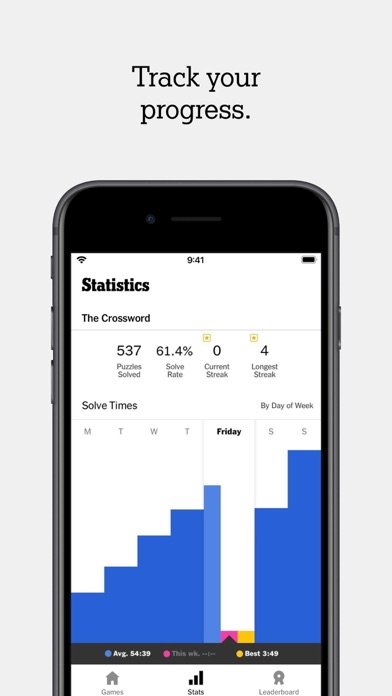
- The NYT Games platform is designed around daily puzzles, and its current app supports statistics and progress tracking across games.
Review Your Mistakes
- After completing a puzzle, do not simply close it.
- Look at answers you did not know.
- Those mistakes are learning opportunities.
Crossword Hints and Assistance
Some digital crossword platforms provide assistance features.
The NYT Games listing currently describes hints and strategy features across several games, while the app also offers statistics and other tracking features.
For learning purposes, hints can be useful.
However, using a complete answer immediately removes much of the value of the exercise.
A better sequence is:
Try → Think → Use crossing letters → Ask for a hint → Learn the answer
This helps you improve rather than simply finish.
Free vs Paid Crossword Access
One important point for new players is that downloading an app does not necessarily mean every puzzle feature is free.
The current NYT Games listings show in-app purchases and subscription options. The App Store listing also shows a separate Crossword subscription and Games subscription options.
The Google Play listing also identifies the game as containing in-app purchases.
Before subscribing, check the pricing and included features displayed in your own country because prices and offers can differ by region and change over time.
Libraries may also provide access programs. For example, some public libraries provide NYT Games access through library accounts or redemption systems, allowing patrons to use the games for limited periods before renewing access.
Common Crossword Problems and Fixes
The App Will Not Open
First, check whether the app is updated.
Then restart the device.
If the problem continues, try reinstalling the app or using the browser version.
My Answers Keep Becoming Wrong
You may be solving too aggressively.
Return to the answers you were least confident about and check the crossing letters.
The Puzzle Is Too Difficult
Start with the Mini or another easier crossword format.
The current NYT Games app includes the Mini and Midi formats specifically alongside the standard Crossword.
I Cannot Remember My Account
Use the account recovery options associated with the email address used during registration.
Avoid creating several different accounts unless there is a specific reason.
My Progress Is Not Appearing
Make sure you are signed in to the same account you used previously.
Also make sure the app is updated and the device has a stable internet connection when synchronization is required.
Crossword Tips for Complete Beginners
Remember these ten rules:
- Start with easy clues.
- Enter answers you know confidently.
- Use crossing letters to solve difficult clues.
- Do not spend too long on one clue.
- Pay attention to singular and plural wording.
- Watch for abbreviations.
- Expect puns and wordplay.
- Check uncertain answers before adding more guesses.
- Practice regularly.
- Learn from every unfamiliar answer.
Is Crossword Good for Students?
Yes, when it is used as a learning activity rather than as a replacement for formal study.
Research has reported positive relationships between crossword activities and vocabulary development in school settings, while other research has explored their role in knowledge retention.
The biggest advantage for students is that a crossword can make repetition feel less like memorization.
Instead of simply reading a vocabulary list, the student has to recall, test, compare, and fit words into a structure.
That makes the activity particularly useful for revision.
Final Recommendation
Crossword games are easy to start but reward consistent practice.
For beginners, a tablet or laptop provides the most comfortable solving experience, while a phone is ideal for quick daily practice. The current NYT Games app officially supports iPhone/iPad, Android devices, and Chromebook through the respective app ecosystems, while public-library guidance also confirms browser-based and mobile access.
For students, crossword solving can support vocabulary development, recall, reading of clues, spelling, and problem solving. Research supports potential educational benefits, although it should be viewed as a supplement to normal study rather than a replacement for classroom learning.
The best way to improve is simple: solve regularly, use crossing letters intelligently, learn unfamiliar words, and focus on accuracy before speed.