
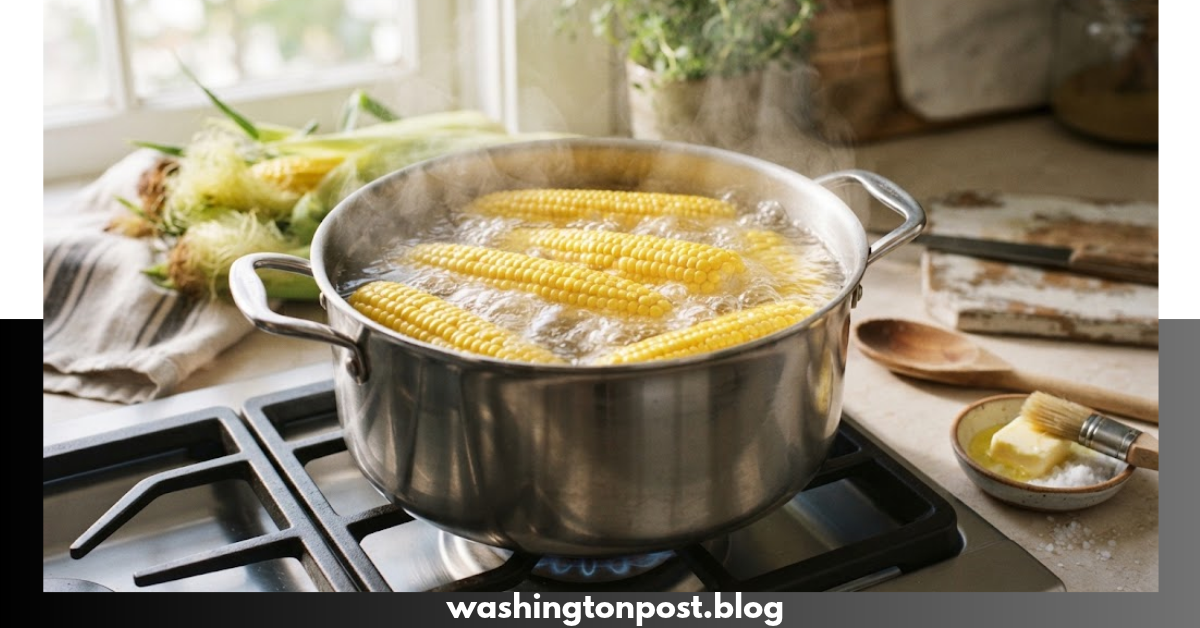
How Long to Boil Corn on the Cob for Perfect Sweetness
Summer meals just are not complete without a fresh, steaming ear of sweet corn dripping with melted butter. Yet, standing over a steaming pot brings up the same frustrating question: how long to boil corn on the cob before it turns rubbery and tough? Overcooking drains the natural sugars, leaving you with chewy kernels, while undercooking leaves them hard.
Getting this kitchen staple right takes just a few minutes of attentive cooking. This guide walks you through exact timings, simple preparation tricks, and foolproof methods to serve up golden perfection every single time.
How Long to Boil Corn on the Cob From Start to Finish?
When the water reaches a rolling boil, drop the shucked ears in carefully. The standard cooking time ranges between 4 to 6 minutes for most fresh varieties. As soon as the water returns to a gentle boil, the kernels transform from opaque to a bright, vibrant yellow, signaling they are ready to pull out.
- Freshly picked ears: 4 minutes for maximum crispness and crunch.
- Standard supermarket ears: 5 to 6 minutes for tender, juicy bite.
- Thicker or older ears: Up to 7 minutes to soften sturdier kernels.
What Is the Best Water Preparation Method?
The secret to restaurant-quality boiled corn starts before the ears even touch the pot. Fill a large stockpot with enough water to completely submerge the ears, leaving a few inches of headspace at the top to prevent splashing.
Many home cooks wonder whether to add salt or sugar to the cooking water. Pure water lets the natural corn flavor shine, but adding a spoonful of sugar enhances the sweetness of out-of-season ears. Avoid adding salt directly to the boiling water, as it can toughen the outer skins of the kernels.
Step-by-Step Instructions for Boiling Corn
Mastering this classic cooking technique takes only a few straightforward steps. Follow this simple process to ensure your side dish turns out sweet, plump, and full of flavor.
- Step 1: Peel away all green husks and pull off every single strand of silk under cold running water.
- Step 2: Bring a large pot of water to a vigorous rolling boil over high heat.
- Step 3: Carefully drop the cleaned ears into the boiling water using tongs to avoid splashes.
- Step 4: Set a kitchen timer for 5 minutes and watch for the water to return to a simmer.
- Step 5: Remove the ears immediately using tongs and transfer them to a platter.
How to Tell When Corn on the Cob Is Done Cooking?
Visual and textural cues tell you the exact moment to rescue your ears from the hot water. The bright yellow color becomes noticeably more intense and glossy.
Press a single kernel gently with the back of a kitchen fork or your fingernail. If a tiny burst of sweet juice pops out and the skin yields softly, the cooking process is complete. Pull them out of the pot immediately to halt the cooking process.
Quick Comparison Table of Cooking Times
Different types of corn require slight adjustments in preparation and cooking duration. Review this quick reference guide to pick the right timing for your meal.
| Corn Variety | Prep Needed | Cooking Time | Best Result |
| Sweet White Corn | Shucked and washed | 4 minutes | Crisp and juicy |
| Yellow Bantam | Shucked and washed | 5 minutes | Tender and sweet |
| Bi-color Super-sweet | Shucked and washed | 5 to 6 minutes | Maximum sugar retention |
| Older Market Ears | Shucked and trimmed | 6 to 7 minutes | Softened texture |
How to Stop the Cooking Process Instantly?
Leaving hot ears sitting in a pile traps residual heat, which continues cooking the tender kernels long after they leave the water. This can quickly turn a perfect batch into a mushy disappointment.
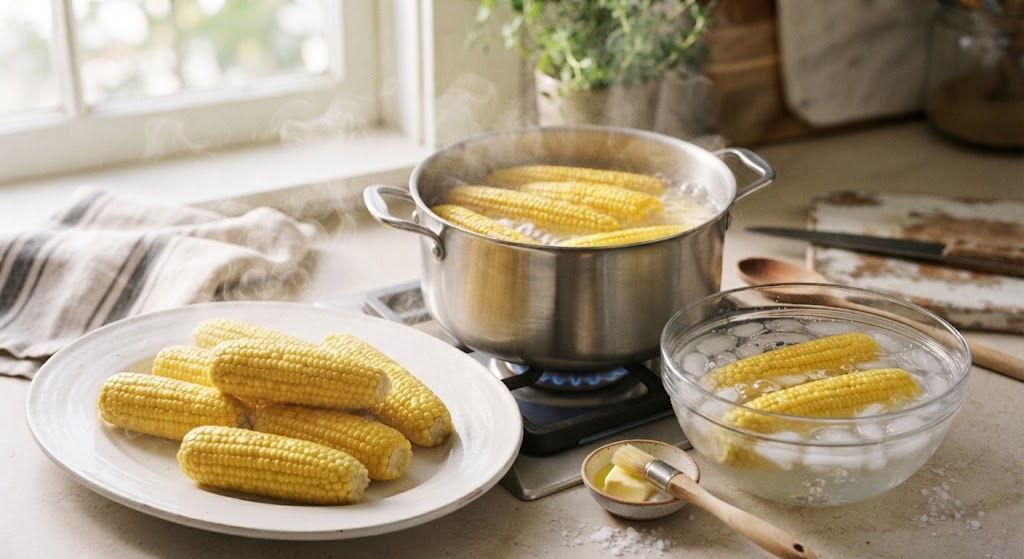
Transfer the cooked ears immediately to a clean serving platter or plunge them briefly into an ice bath if you plan to chill them for a cold summer salad. Spreading them out in a single layer lets steam escape quickly, preserving that fresh-off-the-cob snap.
The Best Seasonings and Toppings to Elevate Flavor
Plain butter and salt represent the timeless gold standard, but a world of creative flavor combinations exists for your next backyard barbecue. Experimenting with fresh herbs and spices takes an ordinary side dish to an entirely new culinary level.
- Classic style: Rolled in salted butter with cracked black pepper.
- Mexican Street Style (Elote): Brushed with crema, cotija cheese, chili powder, and cilantro.
- Garlic Herb Butter: Melted butter mixed with minced garlic, parsley, and parmesan.
- Spicy Kick: Dusted with smoked paprika and cayenne pepper.
Can You Boil Corn on the Cob with the Husks On?
Some outdoor cooking enthusiasts swear by boiling corn straight in its natural green jacket. Leaving the inner husks intact traps steam around the kernels, creating a uniquely tender texture while keeping natural sugars locked inside.
To try this method, peel back the outer dirty layers, strip away the loose silks, and pull the husks back up like a jacket before dropping them into boiling water. Keep in mind that boiling husks takes an extra 2 to 3 minutes, bringing the total time closer to 8 minutes.
How to Store Leftover Boiled Corn Properly?
Proper storage keeps leftover ears fresh and safe to eat for your next meal prep session. Let the cooked ears cool completely down to room temperature before packing them away.
- Wrap each individual ear tightly in plastic wrap or aluminum foil.
- Place the wrapped ears inside an airtight container or zip-top bag.
- Store in the refrigerator for up to 3 to 5 days.
- Slice the kernels off the cob to freeze them for winter soups and casseroles.
Frequently Asked Questions
How long to boil corn on the cob for maximum tenderness?
Boil fresh ears for exactly 5 minutes in rolling boiling water. This window ensures the starch breaks down properly while keeping the individual kernels plump, juicy, and bursting with sweet flavor.
Should I put sugar in the boiling water for corn?
Adding a small spoonful of sugar to the water helps revive older ears that have lost their natural sweetness. Freshly picked seasonal ears rarely need extra sugar because their natural sugars remain fully intact.
Can you overcook corn on the cob in boiling water?
Leaving corn in boiling water past 8 minutes breaks down the cell walls of the kernels. This transforms the naturally crisp texture into a starchy, tough, and rubbery bite.
Is it better to put corn in cold water or boiling water?
Always drop your shucked ears into water that is already at a rolling boil. Starting in cold water causes the kernels to sit too long as the temperature rises, resulting in a soggy texture.
How do you reheat leftover boiled corn without drying it out?
Place leftover ears in a microwave-safe dish with a splash of water, cover tightly with a damp paper towel, and microwave on high for 60 to 90 seconds until heated through.
Can you freeze boiled corn on the cob?
Yes, you can freeze boiled corn easily. Slice the cooled kernels off the cob with a sharp knife and store them in heavy-duty freezer bags for up to 8 months.
Conclusion:
Mastering how long to boil corn on the cob unlocks a quick, delicious addition to any weeknight dinner or weekend gathering. With just a large pot of water, fresh ears, and a 5-minute timer, you can serve up a dish that everyone at the table will love. Grab your fresh ears today, put water on the stove, and enjoy the sweet taste of summer!