Which Graphic Design Software Is Free GFXTEK || Guide
Finding professional graphic design software does not have to mean paying for an expensive subscription. Beginners, students, freelancers, and small business owners can create impressive designs with several free programs. However, choosing the wrong tool can waste time, limit creative work, or introduce unexpected costs. This guide explains which graphic design software is free gfxtek readers can explore, compares trusted options, and shows how to select the right program for different design projects.
Which Graphic Design Software Is Free GFXTEK?
The best free graphic design software depends on the type of project you want to complete. GIMP, Inkscape, Krita, and Affinity by Canva provide powerful desktop design features without requiring a paid subscription. Canva Free, Figma Starter, Penpot, and Photopea offer useful browser-based options.
GFXTEK is a technology information and tutorial website, not a verified graphic design software product. Its website presents technology guides, reviews, and educational resources. Therefore, readers should distinguish between software discussed on GFXTEK and programs actually developed by independent software companies.
Here are the main recommendations:
- Affinity by Canva: Professional photo editing, vector design, and page layouts.
- GIMP: Advanced photo editing and image manipulation.
- Inkscape: Logo creation and scalable vector graphics.
- Krita: Digital painting, illustration, and concept art.
- Canva Free: Social media graphics, presentations, and marketing materials.
- Figma Starter: Website layouts, application interfaces, and prototypes.
- Photopea: Browser-based photo editing and PSD files.
- Penpot: Collaborative interface and web design.
These tools provide different features, so the best choice depends on your experience, creative goals, and preferred workflow.
What Is GFXTEK and How Does It Help Graphic Designers?
GFXTEK publishes technology-related information, tutorials, and educational content. Its website introduces readers to different technology topics and aims to make technical information easier to understand.
People searching for which graphic design software is free gfxtek may expect to discover a particular design application. However, the available information does not establish GFXTEK as the developer or publisher of a dedicated graphic design program.
Instead, readers can use technology guides to explore established applications, understand their features, and compare available options.
What Should You Expect From a GFXTEK Software Guide?
A helpful software guide should explain more than an application’s name. It should help readers understand what they can create, which features cost nothing, and whether the program suits their computer.
Look for information about:
- Main editing and illustration features.
- Supported operating systems.
- Available file formats.
- Free and paid features.
- Commercial usage permissions.
- Installation requirements.
- Official download locations.
This information helps beginners make informed decisions before installing a new application.
What Makes Graphic Design Software Free?
Not every application advertised as free provides the same experience. Some programs offer all their features without payment, while others provide limited access through a free account.
Understanding these differences helps you avoid unexpected charges.
1. Completely Free and Open-Source Software
Open-source programs allow users to access software under a published license. Depending on the license, users may study, modify, and redistribute the software.
Examples include:
- GIMP
- Inkscape
- Krita
- Penpot
These applications are useful for students, independent creators, and professionals who want more control over their design tools.
2. Free Software With Optional Paid Features
Freemium applications provide basic features without charging users. However, they may reserve premium templates, storage, collaboration options, or advanced editing tools for paid customers.
Examples include Canva Free and Figma Starter.
Always check the current plan details before choosing a tool for a business project.
3. Free Browser-Based Design Tools
Online editors let users create graphics without installing a large desktop application.
Photopea and Penpot are useful examples. They offer browser-based workflows for photo editing, vector graphics, interface design, and collaboration.
Their performance depends partly on your internet connection, browser, and computer hardware.
8 Best Free Graphic Design Software Options in 2026
Choosing the right application becomes easier when you compare its purpose and available features.
For anyone researching which graphic design software is free gfxtek, the following programs provide a practical starting point.
1. Affinity by Canva: Best Free All-in-One Design Software
Affinity by Canva is an excellent option for creators who want professional design capabilities without a recurring software subscription.
The application combines three major creative areas: pixel editing, vector design, and page layout. This makes it useful for people who work on different types of visual projects.
Main Features
- Professional pixel-based image editing.
- Vector drawing and illustration.
- Page layout and document design.
- Non-destructive editing.
- Customizable workspaces.
- Export options for PNG, JPEG, SVG, PDF, TIFF, and WebP.
What Can You Create?
You can use Affinity to produce:
- Business logos.
- Marketing graphics.
- Product images.
- Posters and brochures.
- Social media designs.
- Digital illustrations.
- Multi-page documents.
One important advantage is that its official website confirms that the Pixel, Vector, and Layout studios are available without payment. Users need a free Canva account to access the application. Some Canva AI features require a premium plan.
Best for: Freelancers, professional designers, small businesses, and creators who need several design tools in one application.
Official website: https://www.affinity.studio/
2. GIMP: Best Free Software for Photo Editing
GIMP stands for GNU Image Manipulation Program. It is a free, open-source image editor available for Windows, macOS, and Linux.
The application provides tools for photo retouching, image manipulation, digital artwork, and graphic design elements.
GIMP works particularly well for users who want advanced editing controls without purchasing a monthly subscription.
Main Features
- Layer-based editing.
- Image retouching.
- Color correction.
- Selection and masking tools.
- Filters and effects.
- Custom brushes.
- Plugin support.
- Image composition.
What Can You Create?
GIMP supports many everyday and professional creative projects, including:
- YouTube thumbnails.
- Website banners.
- Product advertisements.
- Photo collages.
- Promotional graphics.
- Digital artwork.
- Edited product photographs.
Is GIMP Suitable for Beginners?
Yes, although new users may need time to understand its interface. Beginners can start with cropping, resizing, adding text, adjusting brightness, and working with simple layers.
After learning these basics, they can explore advanced editing techniques.
Best for: Photographers, bloggers, students, and designers who need detailed image editing.
Official website: https://www.gimp.org/
3. Inkscape: Best Free Software for Logo Design
Inkscape is a free, open-source vector graphics editor. It is particularly useful for creating graphics that must remain clear when resized.
Unlike ordinary pixel-based images, vector graphics use mathematical paths, shapes, and curves. This allows designers to enlarge their artwork without losing its sharp appearance.
Main Features
- Vector drawing tools.
- Bézier curves.
- Shape creation.
- Text editing.
- Path manipulation.
- Gradient controls.
- SVG file support.
- PNG and PDF export options.
What Can You Create?
Inkscape works well for:
- Business logos.
- Brand symbols.
- Icons.
- Illustrations.
- Infographics.
- Posters.
- Product labels.
- Printable graphics.
Why Do Designers Choose Inkscape?
Logos often need to appear on business cards, websites, packaging, and large promotional banners.
A vector-based design makes this process easier because the artwork can scale to different sizes without becoming blurry.
Best for: Logo designers, illustrators, students, and anyone who regularly works with SVG files.
4. Krita: Best Free Digital Painting Software
Krita is a free, open-source creative application designed mainly for digital painting and illustration.
It gives artists a wide selection of brushes, layers, drawing assistants, and animation tools. Both beginners and experienced illustrators can use it to develop original artwork.
Main Features
- Customizable painting brushes.
- Layer management.
- Brush stabilizers.
- Drawing assistants.
- Color management.
- Animation tools.
- Selection and transformation tools.
- Community-created resources.
What Can You Create?
Krita is suitable for:
- Digital portraits.
- Cartoon illustrations.
- Comic artwork.
- Concept art.
- Character designs.
- Game illustrations.
- Textures.
- Animated artwork.
Is Krita Better Than GIMP?
The two applications serve different creative needs.
Krita focuses on painting and illustration, while GIMP concentrates more on image editing and manipulation.
Choose Krita if you want to draw original artwork. Choose GIMP if you mainly edit existing photographs and images.
Best for: Digital artists, illustrators, comic creators, and students learning digital painting.
5. Canva Free: Best for Social Media and Marketing Graphics
Canva is a popular online design platform that helps users create visual content through templates and drag-and-drop editing.
Its free plan is especially useful for people who want to produce attractive graphics without learning complicated design software.
Main Features
- Ready-made design templates.
- Text and typography controls.
- Image cropping and resizing.
- Basic photo editing.
- Graphic elements.
- Presentation creation.
- Social media design formats.
- Online collaboration features.
What Can You Create?
Canva Free can help you design:
- Instagram posts.
- Facebook banners.
- YouTube thumbnails.
- Business presentations.
- Flyers.
- Invitations.
- Posters.
- Marketing materials.
What Are Canva Free’s Limitations?
Canva uses a freemium model. Some templates, stock photographs, design elements, and advanced features require a paid plan.
Before exporting a design, check whether it contains premium elements that require payment.
Best for: Beginners, bloggers, social media managers, teachers, and small business owners.
Official website: https://www.canva.com/
6. Figma Starter: Best for Website and App Design
Figma is a collaborative design platform used to create digital interfaces and interactive prototypes.
It is particularly useful for website designers, application developers, and teams working on digital products.
Its Starter plan is free and includes access to several Figma products, although some collaboration and advanced features have limits.
Main Features
- Interface design.
- Wireframing.
- Interactive prototypes.
- Reusable design components.
- Real-time collaboration.
- FigJam brainstorming.
- Presentation tools.
- Browser-based access.
What Can You Create?
Figma supports projects such as:
- Website homepage layouts.
- Mobile application screens.
- Login pages.
- Dashboard designs.
- Website prototypes.
- Navigation systems.
- User interface mockups.
What Are the Free Plan Limitations?
Figma Starter limits the number of files in team folders. Its current plan also restricts features such as team libraries, version history, and advanced collaboration permissions.
However, users can keep unlimited draft files.
Best for: UI designers, website developers, students, and small creative teams.
Official website: https://www.figma.com/
7. Photopea: Best Free Online Photo Editor
Photopea is a browser-based image editor that offers many tools found in traditional desktop editing applications.
It is especially useful when you need to edit an image quickly without downloading additional software.
Photopea supports PSD files, making it a practical choice for users who regularly work with Photoshop-compatible documents.
Main Features
- Layer-based image editing.
- Selection tools.
- Background removal through editing techniques.
- Masking and blending.
- Image resizing.
- Filters and adjustments.
- PSD file support.
- Multiple image export formats.
What Can You Create?
You can use Photopea for:
- Product photo editing.
- Website graphics.
- Social media images.
- Image compositions.
- Promotional banners.
- Photo retouching.
- Basic logo adjustments.
Does Photopea Require Installation?
No. You can access it through a supported web browser.
The editor processes files locally on your device according to its official website. This can be useful when you prefer not to upload your working images to an editing service.
Best for: Students, occasional designers, bloggers, and people who need quick PSD editing.
8. Penpot: Best Open-Source Tool for Collaborative Design
Penpot is an open-source design platform created for designers and developers.
It supports interface design, responsive layouts, interactive prototypes, and design-to-code workflows.
Its use of open standards makes it a useful option for teams that want greater flexibility in their design process.
Main Features
- Vector-based interface design.
- Interactive prototypes.
- CSS Grid and Flex Layout.
- Reusable components.
- Design systems.
- Developer inspection tools.
- Open design formats.
- Self-hosting options.
What Can You Create?
Penpot works well for:
- Website wireframes.
- Mobile app layouts.
- Interactive prototypes.
- Dashboard interfaces.
- Design systems.
- Responsive website concepts.
- Collaborative product designs.
Best for: UI/UX designers, developers, educational projects, and teams interested in open-source software.
Complete Comparison Table: Free Graphic Design Software
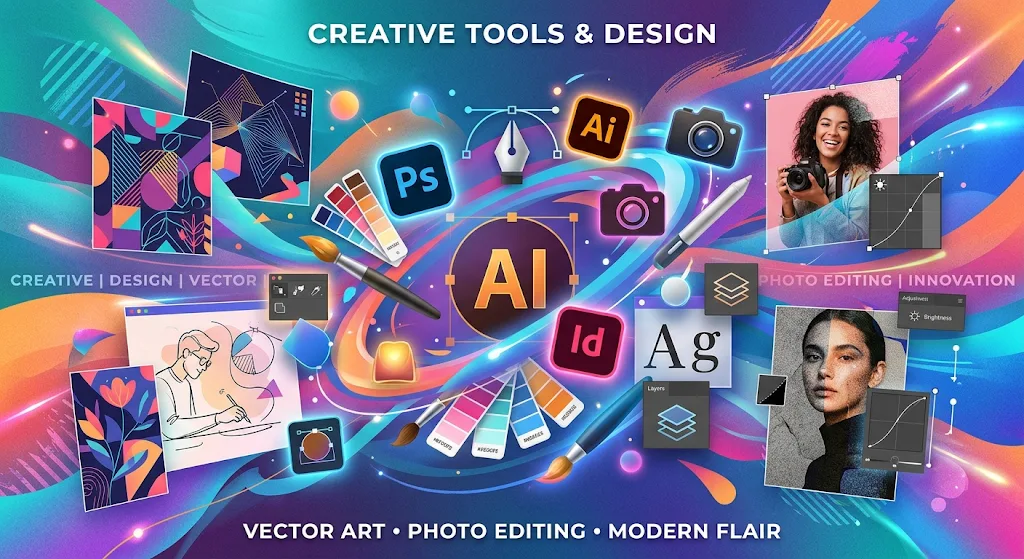
The following table compares the main applications by purpose, operating system, pricing model, and practical limitations.
| Software | Best Use | Platforms | Free Model | Main Limitation |
| Affinity by Canva | Professional graphic design | Windows, macOS | Free application | Canva AI features require a premium plan |
| GIMP | Photo editing | Windows, macOS, Linux | Free and open source | Learning curve |
| Inkscape | Logos and vector graphics | Windows, macOS, Linux | Free and open source | Interface takes practice |
| Krita | Digital painting | Windows, macOS, Linux | Free and open source | Not designed primarily for photo editing |
| Canva Free | Social media graphics | Browser, mobile, desktop | Free plan | Some assets require payment |
| Figma Starter | UI/UX design | Browser, desktop | Free plan | Team file and feature limits |
| Photopea | Online image editing | Web browser | Free online editor | Advertising-supported experience |
| Penpot | Collaborative interface design | Browser, self-hosted | Free access and open-source software | Different workflow from traditional image editors |
Which Application Offers the Most Creative Freedom?
Affinity by Canva stands out for users who want photo editing, vector design, and page layouts in one desktop application.
GIMP, Inkscape, and Krita are strong choices for people who prefer open-source software. Canva Free is more convenient for quick designs, while Figma and Penpot focus on digital products and interface creation.
There is no single winner for every project. Your creative requirements should determine your selection.
How to Choose the Right Free Graphic Design Software
The best application is the one that supports your actual work. Before downloading anything, identify the type of graphics you want to create.
Here are some practical recommendations for different users.
For Beginners
Start with Canva Free if you have never used a design application before. Its templates and simple editing controls make it easier to understand basic design concepts.
Once you become comfortable with colors, fonts, alignment, and spacing, try another application to develop more advanced skills.
For Professional Designers
Explore Affinity by Canva, GIMP, and Inkscape. These applications provide different creative tools for editing images, building vector artwork, and preparing layouts.
Your choice should depend on the file formats and features your projects require.
For Students
Students can begin with Krita, Canva Free, and Inkscape. These programs cover illustration, presentations, posters, and logo design without requiring a large software budget.
Always check the institution’s requirements if you need to submit files in a particular format.
For Freelancers
Freelancers should choose tools that support client requirements.
For example:
- Use Inkscape for scalable logos.
- Use GIMP for image retouching.
- Use Affinity for professional layouts and vector projects.
- Use Canva for quick promotional graphics.
- Use Figma for website and app prototypes.
Before accepting paid work, check each application’s licensing terms and the licenses of any fonts, stock images, or design assets you include.
How to Download Free Graphic Design Software Safely
Downloading software from an unknown website can expose your computer to unwanted programs, fake installers, or harmful files.
A safe download process protects your device and your creative projects.
Follow these steps:
- Visit the official website: Find the developer’s original download page instead of relying on unfamiliar third-party links.
- Check the software name: Confirm that the application matches the product you intend to install.
- Review system requirements: Check your operating system, available storage, RAM, and processor compatibility.
- Read the license information: Understand whether the application allows personal and commercial use.
- Download the correct version: Choose the installer designed for your operating system.
- Scan the downloaded file: Use trusted security software before opening an unfamiliar installer.
- Review installation options: Avoid unnecessary additional applications or browser extensions.
- Keep your software updated: Install security updates and bug fixes from the official developer.
If you search which graphic design software is free gfxtek and discover an unfamiliar download link, verify its developer before installing anything.
Can You Use Free Graphic Design Software for Commercial Projects?
Yes. Several free applications allow commercial use, but you must check the relevant software license and the terms for individual design assets.
For example, Krita uses the GNU General Public License, which permits commercial artwork. GIMP and Inkscape also use open-source licensing.
However, software licensing and asset licensing are two different things.
A program may allow commercial projects while a particular photograph, font, template, or illustration has separate usage restrictions.
Before delivering a project to a client:
- Check the software license.
- Confirm font licensing.
- Review stock image permissions.
- Check template usage restrictions.
- Keep records of purchased or licensed assets.
- Avoid using copyrighted artwork without permission.
These simple checks help protect your work and your clients.
What Computer Specifications Do You Need?
You do not always need an expensive computer to start graphic design. Many free applications work on ordinary laptops and desktop computers.
However, more demanding projects require additional memory and processing power.
| Computer Component | Basic Recommendation | Why It Matters |
| Processor | Modern dual-core or better | Handles everyday editing tasks |
| RAM | 8 GB recommended for general work | Supports multiple tools and documents |
| RAM for heavier projects | 16 GB or more | Helps with large files and complex designs |
| Storage | SSD preferred | Improves application loading and file access |
| Display | Full HD recommended | Provides comfortable workspace |
| Graphics | Integrated graphics for basic work | Supports ordinary design tasks |
| Internet | Stable connection | Helps with online editors, downloads, and collaboration |
These are general purchasing guidelines, not official minimum requirements for every application. Always check the developer’s latest system requirements before installation.
Common Mistakes to Avoid When Choosing Free Design Software
A free application can provide excellent value, but choosing it without understanding its features may create unnecessary problems.
Avoid these common mistakes:
Choosing Software Without Understanding Its Purpose
A photo editor cannot replace every vector illustration program. Similarly, a painting application may not provide the layout features needed for a professional brochure.
Choose a tool according to your project.
Ignoring Export Formats
Always check whether an application can export the formats your clients or platforms require.
Common formats include:
- PNG for transparent graphics.
- JPEG for photographs.
- SVG for scalable vector graphics.
- PDF for documents and print designs.
- PSD for Photoshop-compatible projects.
Assuming Every Feature Is Free
Some applications provide free accounts but charge for premium templates, storage, advanced collaboration, or AI features.
Check the pricing page before building your entire workflow around one application.
Downloading Unofficial Software
Avoid cracked installers and unfamiliar download websites. They can expose your device to security risks and create licensing problems.
Forgetting to Save Editable Files
Exporting a final image is not the same as saving your original project.
Keep editable source files so you can update text, colors, shapes, and layouts later.
How to Improve Your Graphic Design Skills With Free Tools
Getting access to design software is only the first step. Learning basic design principles will help you create better visual content.
You can improve your skills through regular practice.
Try the following learning plan:
Week 1: Learn Basic Design Principles
- Understand color combinations.
- Practice choosing readable fonts.
- Study alignment and spacing.
- Learn how to create visual hierarchy.
Week 2: Practice Image Editing
- Crop and resize photographs.
- Adjust brightness and contrast.
- Experiment with layers.
- Create simple image compositions.
Week 3: Learn Vector Design
- Draw basic shapes.
- Practice creating paths.
- Design a simple icon.
- Build a basic logo.
Week 4: Create Real Projects
- Design a social media post.
- Create a business logo.
- Prepare a promotional banner.
- Build a small portfolio.
You can use free tutorials and official documentation to learn each application’s tools. Practicing with real projects will help you understand which features matter most.
Is AI Graphic Design Software Worth Using?
AI-powered design features can help users generate ideas, create visual concepts, and speed up certain creative tasks.
Some platforms offer AI-assisted image creation, text generation, editing, and layout suggestions. However, access to these features may depend on the application and subscription plan.
AI tools can be useful for:
- Exploring design concepts.
- Generating creative ideas.
- Developing color combinations.
- Creating draft layouts.
- Producing visual references.
- Speeding up repetitive tasks.
Still, designers should review AI-generated results before publishing them. Check image quality, text accuracy, licensing terms, originality, and brand consistency.
A strong design still requires human judgment and attention to detail.
Conclusion
The right free graphic design application depends on what you want to create.
Affinity by Canva is an excellent starting point for users who want professional photo, vector, and layout tools without paying for the application. GIMP offers powerful photo editing, while Inkscape provides the tools needed for scalable logos and illustrations.
Krita is a strong option for digital artists. Canva Free makes everyday marketing graphics easier, and Figma Starter and Penpot support website and application design.
If you originally searched which graphic design software is free gfxtek, the important takeaway is that GFXTEK provides technology information rather than a verified standalone design application. You can explore established tools from their official developers instead.
Start with one application, learn its essential features, and complete a small project. As your skills improve, you can add more tools to your workflow without spending money unnecessarily.
Which free graphic design software would you choose for your next project? Share your experience and help other beginners find the right design tool.
Frequently Asked Questions
1. Which graphic design software is free on GFXTEK?
GFXTEK is a technology information website, not a verified graphic design software developer. Readers exploring which graphic design software is free gfxtek can consider Affinity, GIMP, Inkscape, Krita, and Canva Free.
2. What is the best completely free graphic design software?
GIMP, Inkscape, and Krita are excellent completely free, open-source applications. Each focuses on a different creative task, including photo editing, vector design, and digital painting.
3. Can I create professional designs using free software?
Yes. Free applications offer tools for creating logos, marketing graphics, illustrations, website visuals, and photo compositions. Your design skills and understanding of visual principles matter more than the price of your software.
4. Which free graphic design software is easiest for beginners?
Canva Free is one of the easiest options for beginners because it offers templates and simple editing controls. New users can quickly create social media posts, presentations, and promotional graphics.
5. Is free graphic design software safe to download?
Yes, when you download genuine software from its official developer website. Avoid unknown installers, cracked applications, and suspicious download links, and scan unfamiliar files before installation.
6. Can I use free graphic design software to earn money?
Yes. You can use suitable free applications to create client logos, social media graphics, website visuals, illustrations, and promotional materials. Always review software and asset licensing terms before selling or delivering commercial designs.